McMillan Plan
Author: U.S. Senate Park Commission
Date: January 1902
PDF Source: National Capital Planning Commission
Description
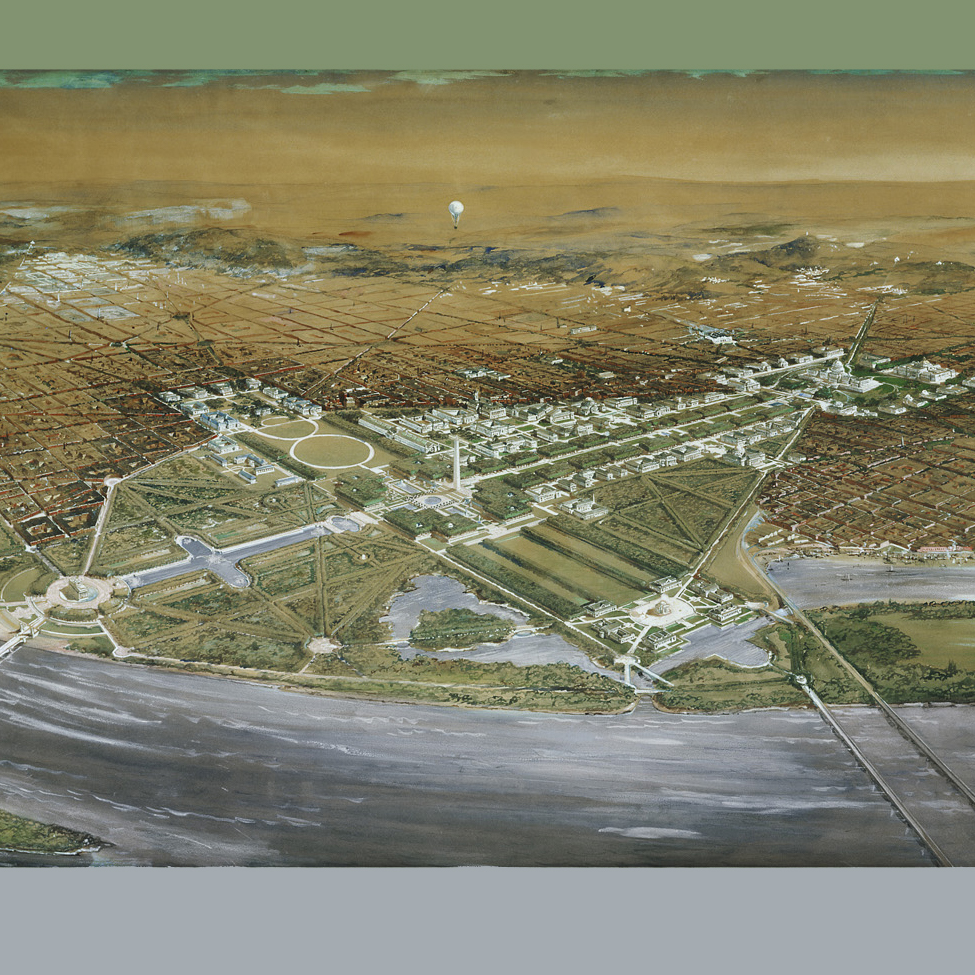
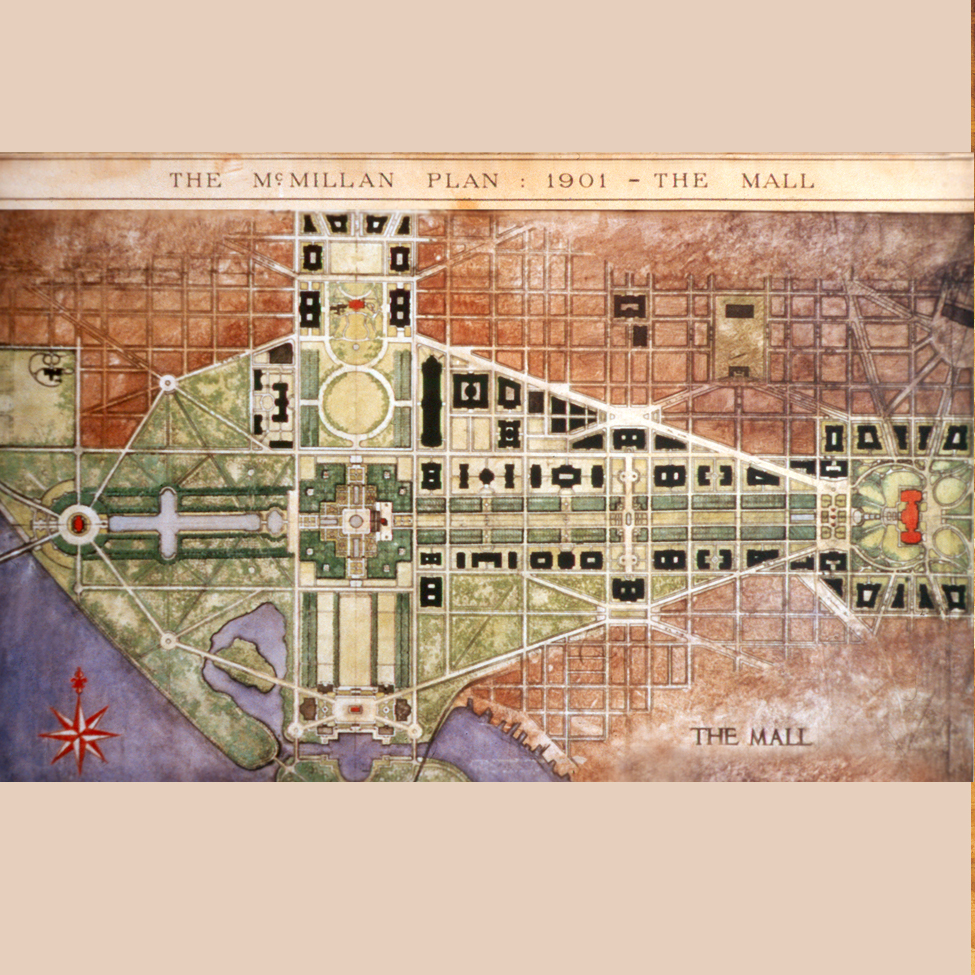
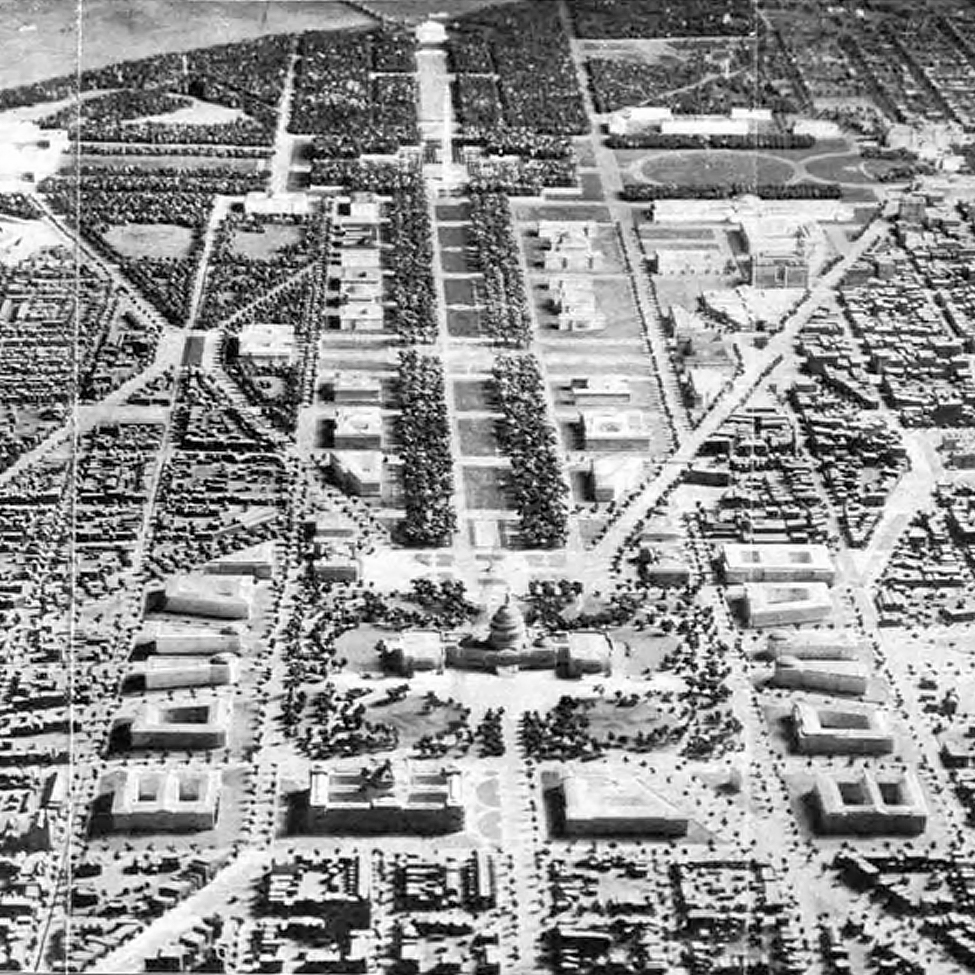
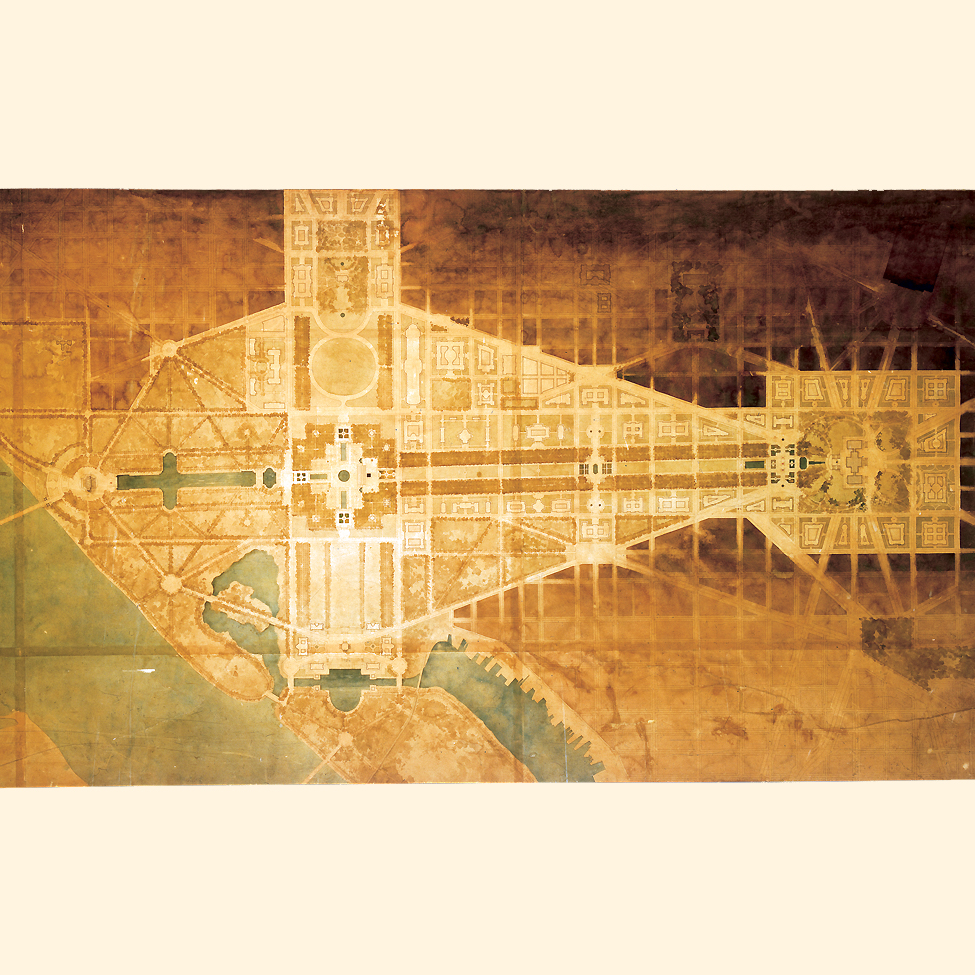
The initiative reinforced L’Enfant Plan (see weblink) concepts with recommendations to formally develop the monumental core. It also proposed a system of parks and parkways, including an arrangement encompassing the Civil War-era fortifications encircling the city (see Fort Drive).
In the late 19th century, various groups including the U.S. Corps of Engineers, Washington Board of Trade, and American Institute of Architects held multiple visions for the nation’s capital. They reflected both long-term practical and short-term commemorative interests for Washington’s 1900 centennial.
Congress passed legislation in 1893 and 1898 to develop an official plan extending the L’Enfant Plan’s roadway system to the Washington city boundary (see Highway weblinks), but concerns about growth patterns persisted. The location of railroads within the monumental core was particularly debated.
In 1901, a Senate resolution authorized the Committee on D.C. to report on plans for the District’s park system. The committee’s chair, Senator James McMillan, who also recently secured the chairmanship of Washington’s centennial committee, engaged several experts: Daniel Burnham, Charles McKim, Frederick Law Olmsted, Jr., and August Saint-Gaudens. Known as the Senate Park Commission upon their appointment (or later, the “McMillan Commission”), they developed a neoclassic scheme for the monumental core along with an expanded “modern park system” to form “one great composition designed to comprehend the entire District of Columbia.” Addressing environmental, viewshed, and quality of life concerns (e.g., water quality and seasonal heat), they called for an increase in the quantity and quality of parks, parkways, and fountains.
Conveyed in Senate report 166, as “The improvement of the park system of the District of Columbia” and in a Corcoran Gallery of Art exhibition, the plan generated broad interest. However, when implementation lagged, Congress established new agencies to oversee development. It designated the U.S. Commission of Fine Arts in 1910 to review and advise on the design of new structures, and the Public Buildings Commission (a predecessor to the General Services Administration) in 1916 to facilitate federal office construction. It established the National Capital Park Commission in 1924, before reestablishing it as a planning agency as the National Capital Park and Planning Commission in 1926 (see 1920s weblinks).